
IGH Camouflage with Custom Skin-Tone Pigment
A precision-based cosmetic approach designed to reduce the visible contrast of diagnosed IGH spots.
DERMATOLOGIST-REFERRED CASE SHOWN

Paramedical Tattoo Camouflage for IGH White Spots
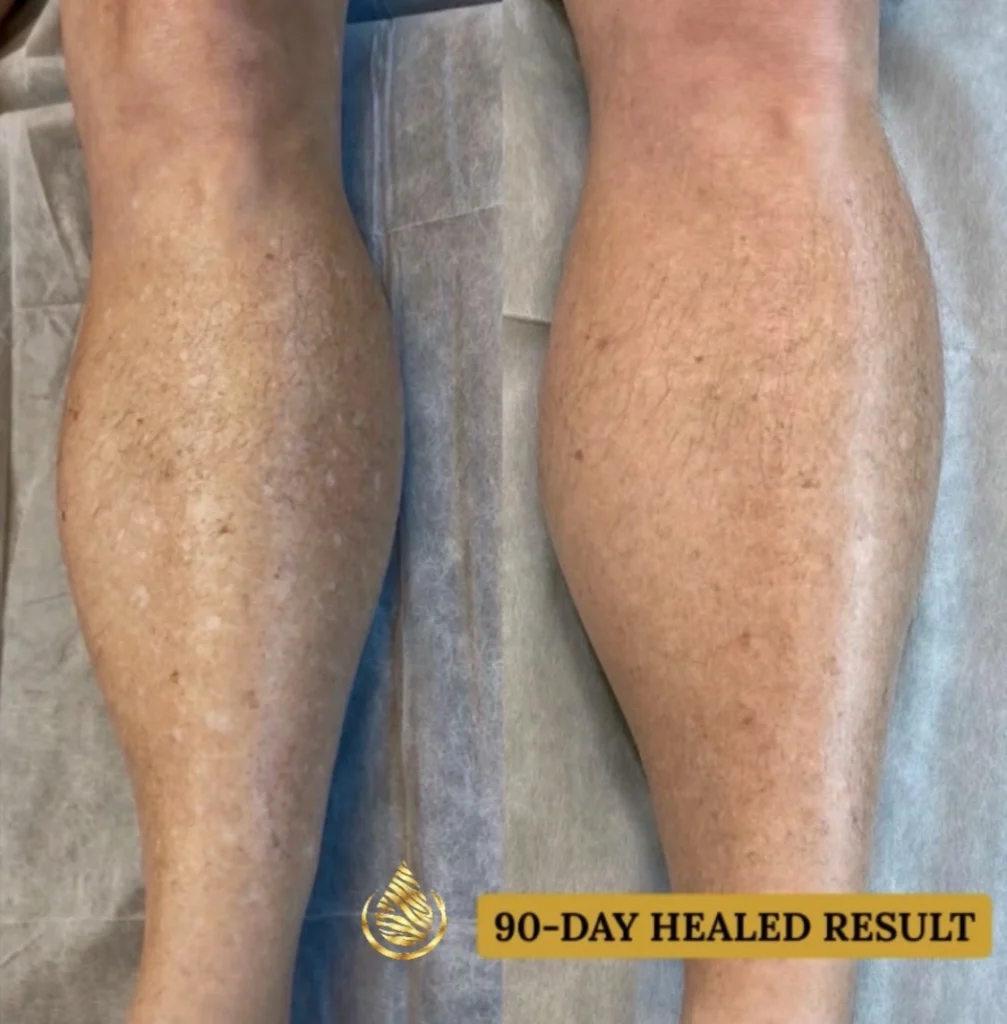
Custom skin-tone camouflage for diagnosed IGH and persistent white spots, perfomed by Master Paramedical Tattoo Artist Elena Sanchez. The goal is to reduce visible contrast by individually blending pigment to the surrounding skin – not to treat the underlying condition.

Upper Confirmed IGH case: dermatologist-referred client, one session, photographed approximately 90 days healed. Individual results may vary.
Real client photography
No one-color formula
Coppell, Texas | Houston, TX
Candidate-specific planning
What Is Idiopathic Guttate Hypomelanosis?
Idiopathic guttate hypomelanosis, commonly called IGH, is a benign pigmentation condition that appears as small pale or white spots. It is especially common on sun-exposed areas such as the forearms and shins and become more common with age.
The exact cause is not fully understood. Aging, chronic ultraviolet exposure, genetics and other factors have all been associated with it’s developement. IGH itself is benign, but some people seek cosmetic improvement because the lighter spots can create noticeable contrast with surrounding skin.
Not all white spots on skin are IGH. If a person has not been diagnosed, medical evaluation may be appropriate before cosmetic camouflage.
White spots on skin? White spots on legs?
IGH is one possible cause of white or lighter spots on the skin. Other conditions can also cause hypopigmented or depigmented areas, so an accurate diagnosis is important before considering cosmetic camouflage.
White Spots on the Legs: A Dermatologist-Referred IGH Case
The client said he first began noticing the lighter spots after college and that they become more noticeable with age. His IGH was medically identified, and his dermatologist referred him specifically to Elena Sanchez at Illusions by Ink Studio for paramedical tattoo camouflage.
DIAGNOSIS
Confirmed IGH
SESSIONS
One session
FOLLOW-UP
Approx. 90 days healed
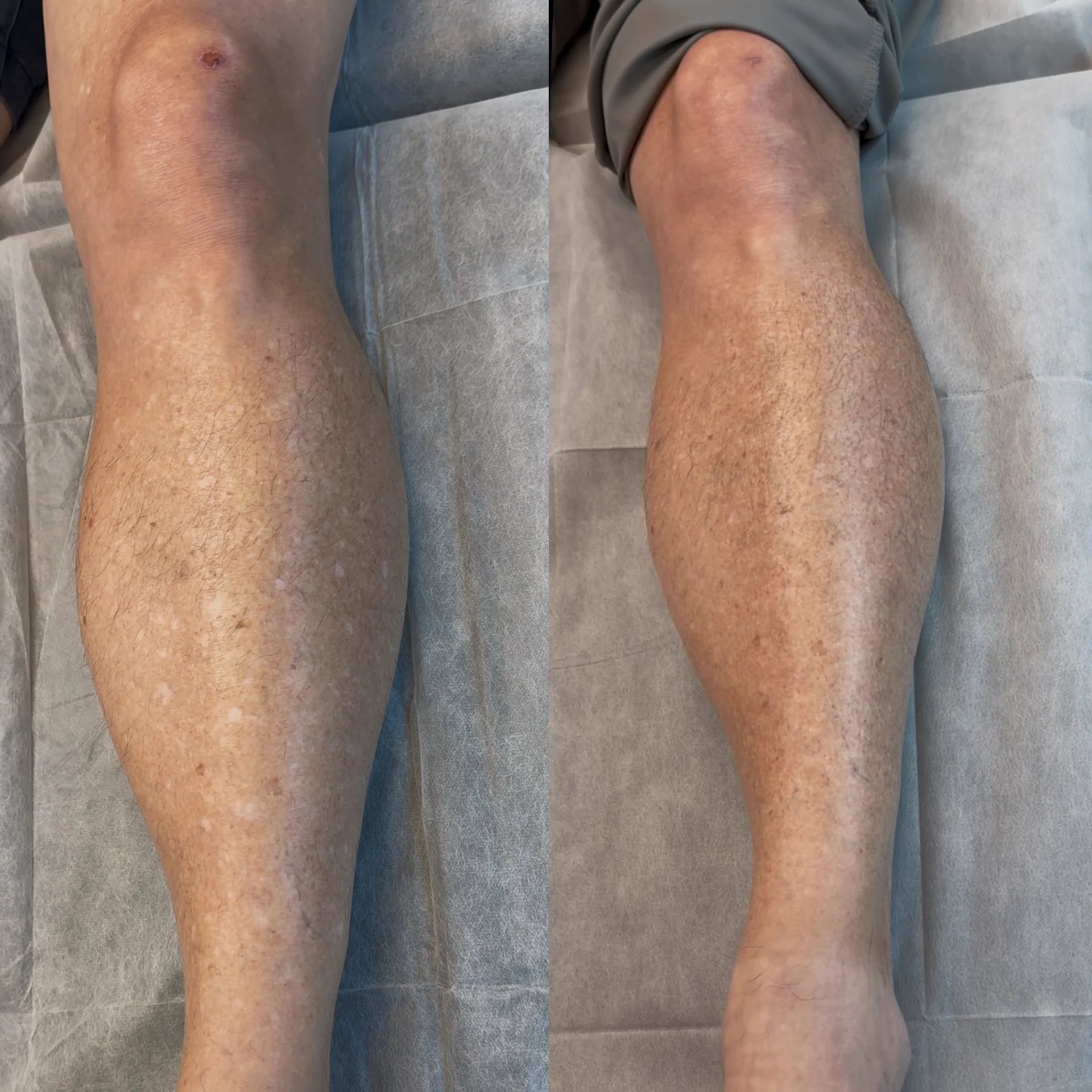
Right lower leg — confirmed IGH before and approximately 90 days healed after one paramedical tattoo camouflage session.
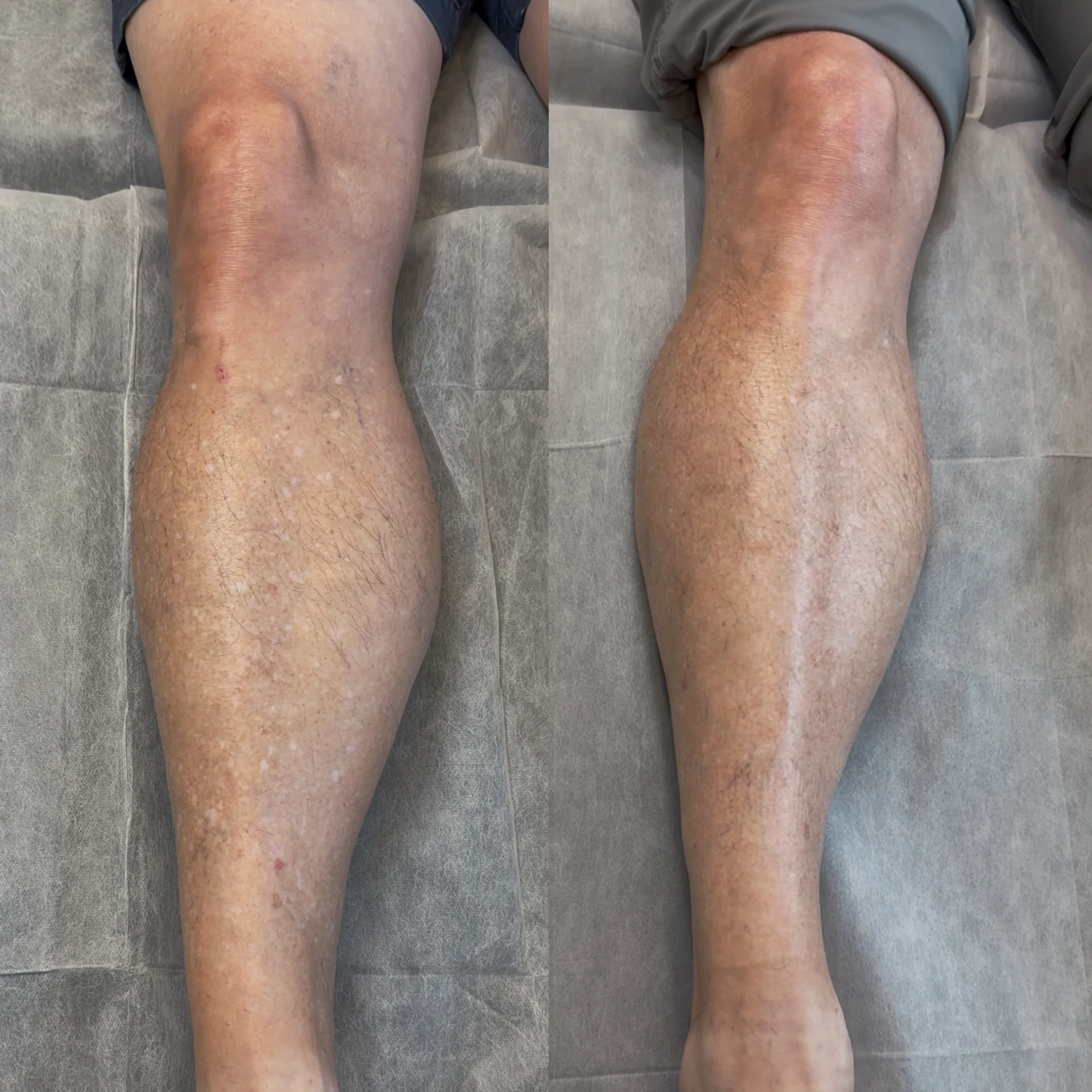
Left lower leg — confirmed IGH before and approximately 90 days healed after one paramedical tattoo camouflage session.
Individual results may vary. Some clients may require additional sessions depending on treatment area and skin characteristics.
Lasers didn't work.
Creams didn't work.
Paramedical Tattooing did.
Based on the client’s reported experience. His dermatologist ultimately recommended cosmetic pigment camouflage and referred him to Elena. This statement is not a claim that other approaches never work for every person.
IGH Camouflage Is More Than Choosing a “Skin-Colored Ink”
Elena evaluates the surrounding skin, undertone, distribution of the lighter areas and how pigment is likely to heal before building a
custom strategy. The goal is not to create an opaque patch of color, but to reduce contrast so the treated areas integrate more
naturally with nearby skin.
1 · Skin-Tone Analysis
Evaluate undertone, overtone
and color variation across the
treatment area.
2 · Custom Pigment Formulation
Blend and modify pigment for
the individual rather than
choosing a preset “skin tone.”
3 · Controlled Application
Adjust depth, pressure and
saturation to how the skin is
receiving pigment.
4 · Healed Evaluation
Assess the healed result and
determine whether additional
refinement is appropriate.
REAL IGH CAMOUFLAGE RESULTS BY ELENA SANCHEZ
The cases shown below are confirmed IGH clients who authorized the use of their images. Additional IGH clients are not shown in respect of their privacy and image-sharing preferences.
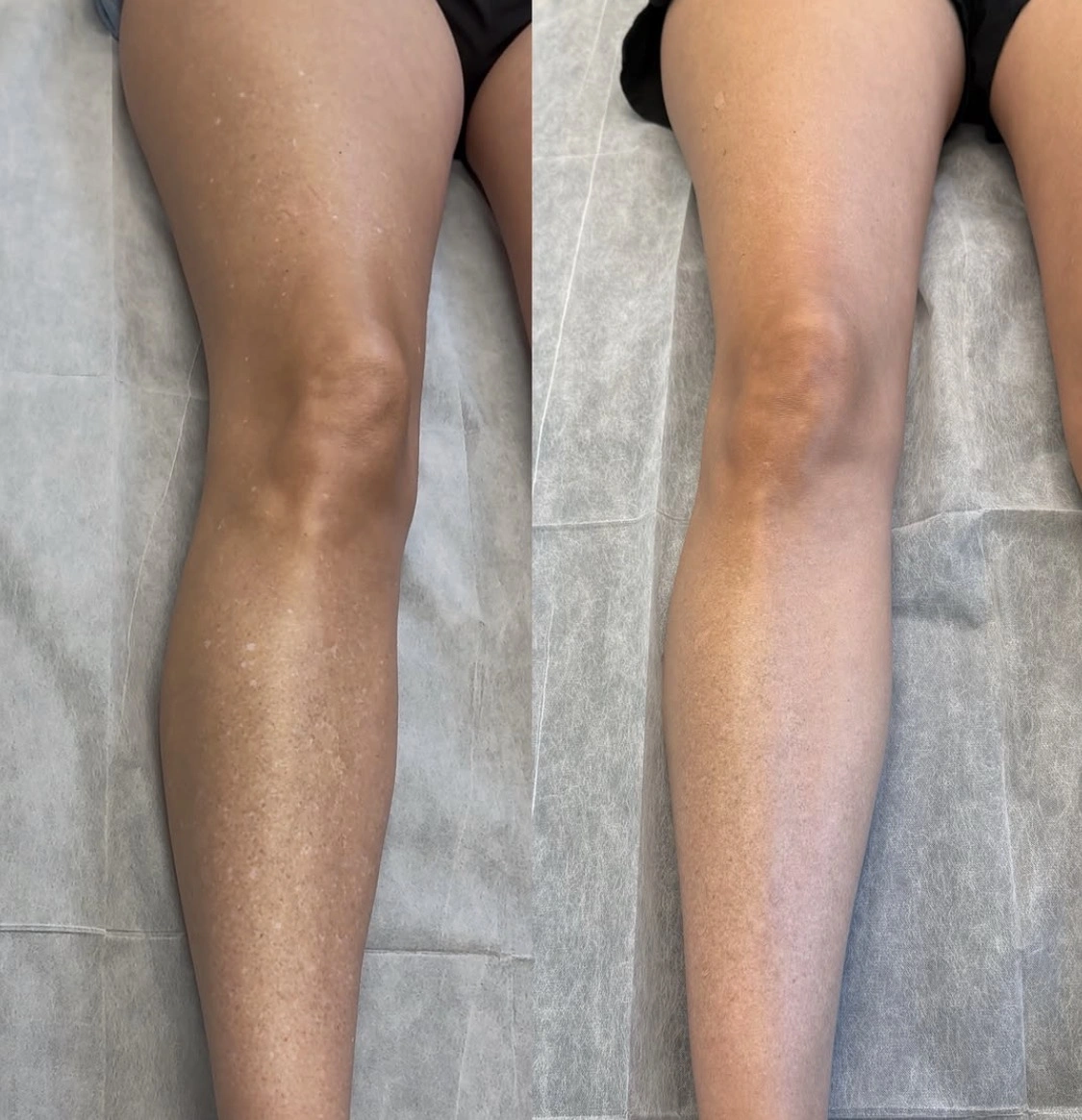
Confirmed IGH on leg before and after skin-tone camouflage result.
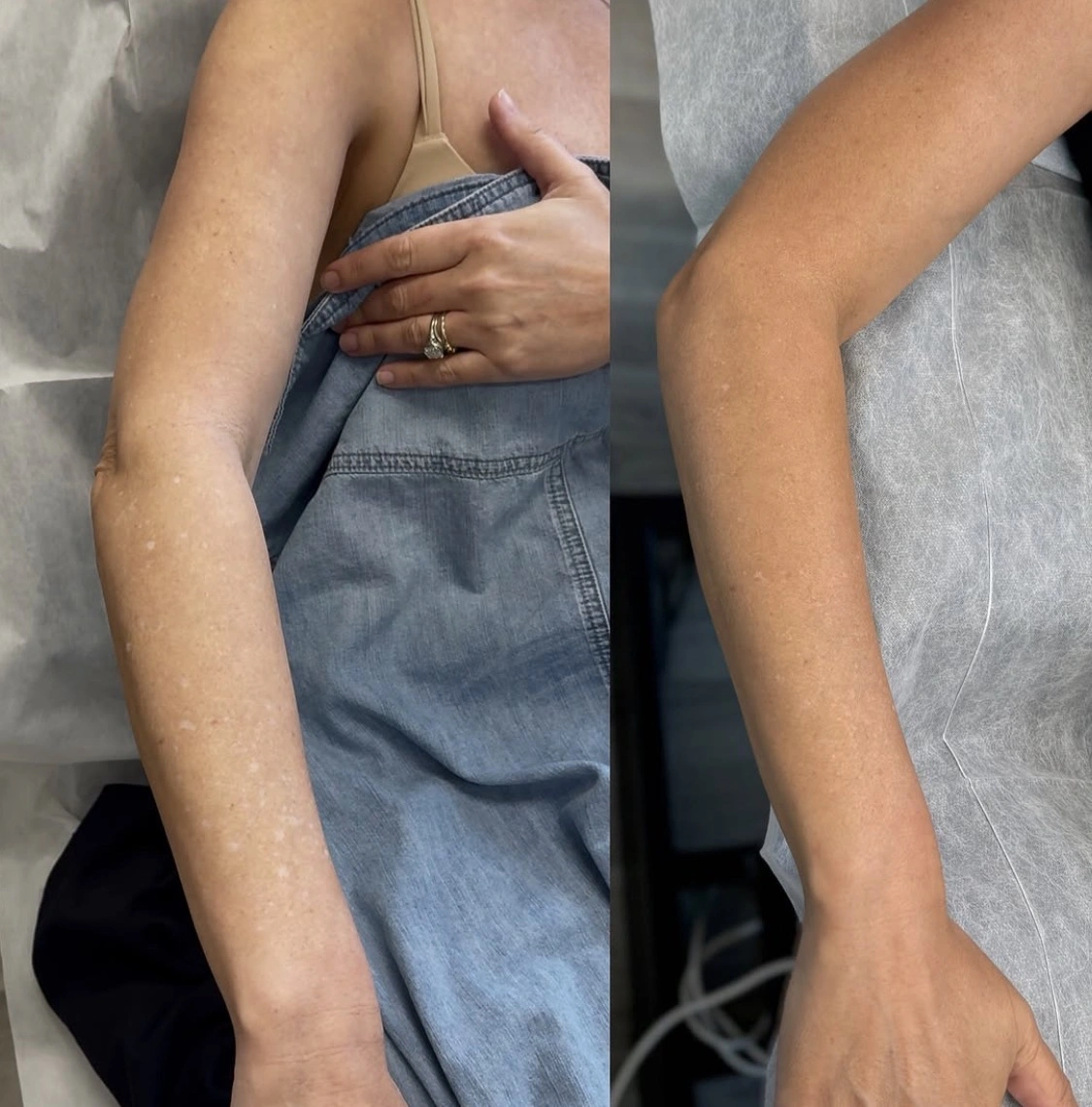
Confirmed IGH on arm before and after skin-tone-camouflage result.
IGH Across the Upper Back and Chest
This confirmed IGH client demonstrates why each treatment area should be assessed individually. Skin color, undertone and visible contrast can vary across the body, so Elena evaluates each area separately rather than assuming one pigment formula or level of saturation will suit every location. These images show the upper back and upper chest approximately 9 months healed after camouflage.
This case shows how IGH can appear across more than one anatomical area. Elena evaluates each area individually because surrounding skin tone, undertone and visible contrast can differ across the body.
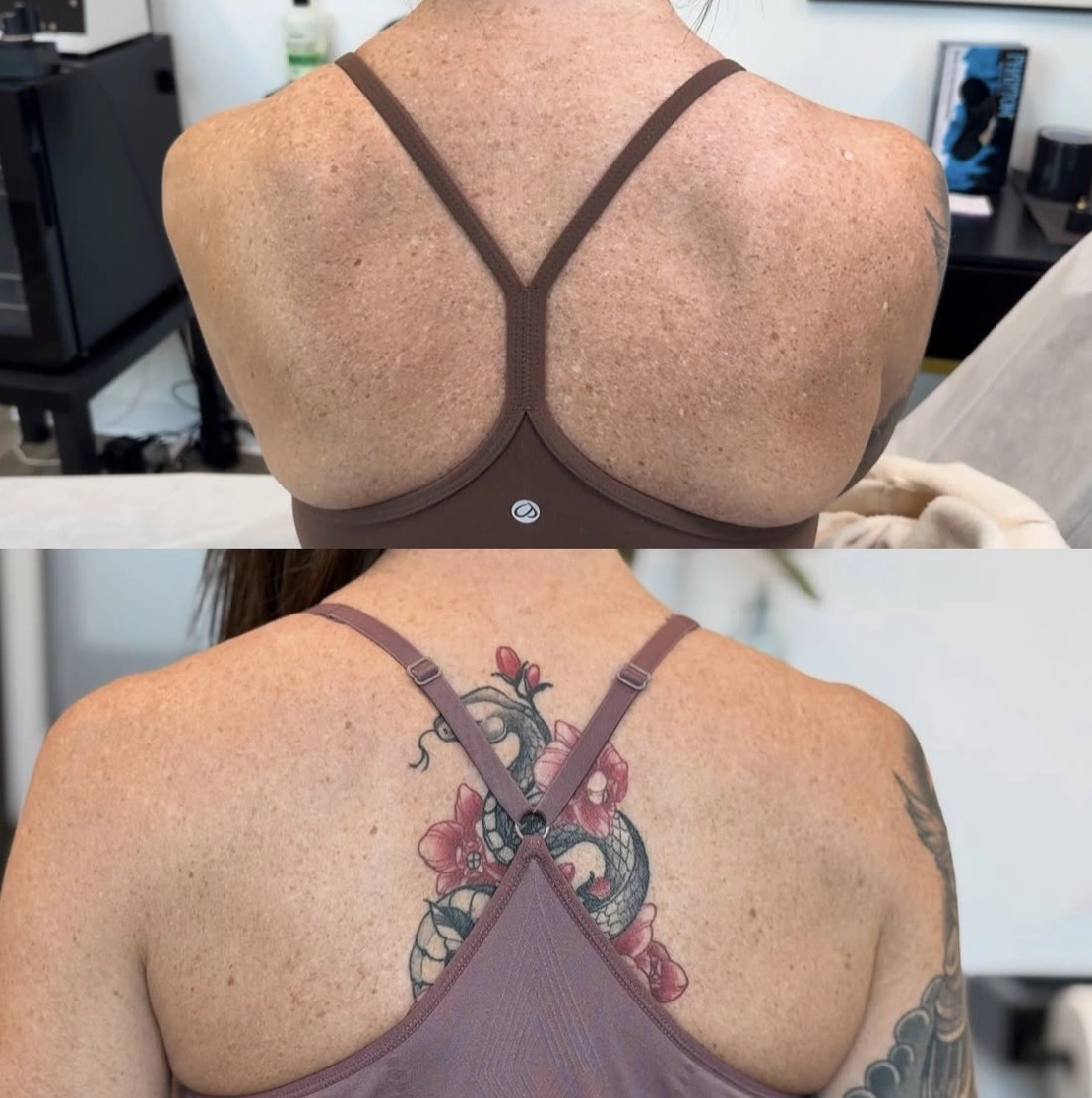
Upper back — confirmed IGH before and approximately 9 months healed after camouflage.
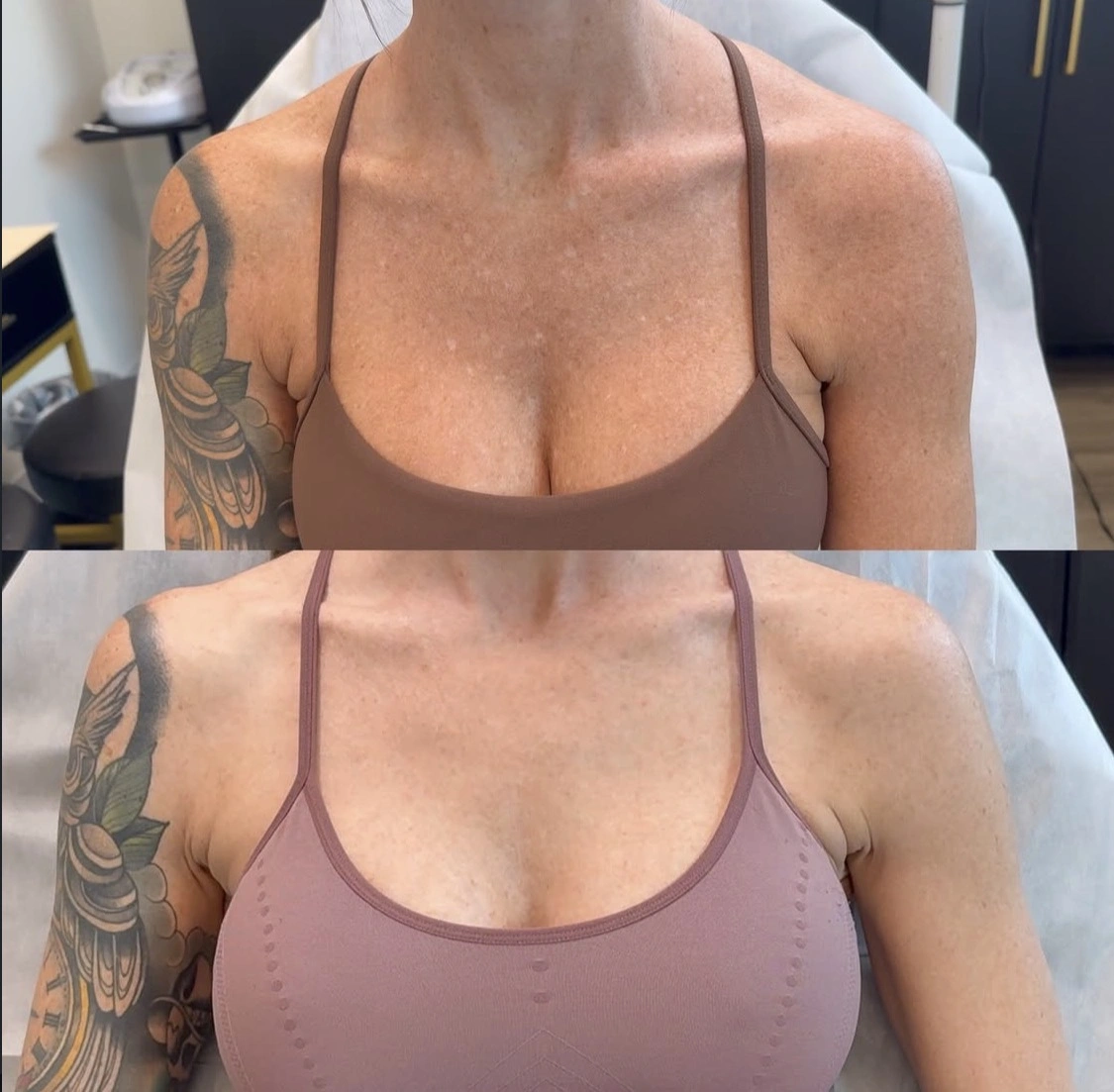
Upper chest — same confirmed IGH client before and approximately 9 months healed after camouflage.
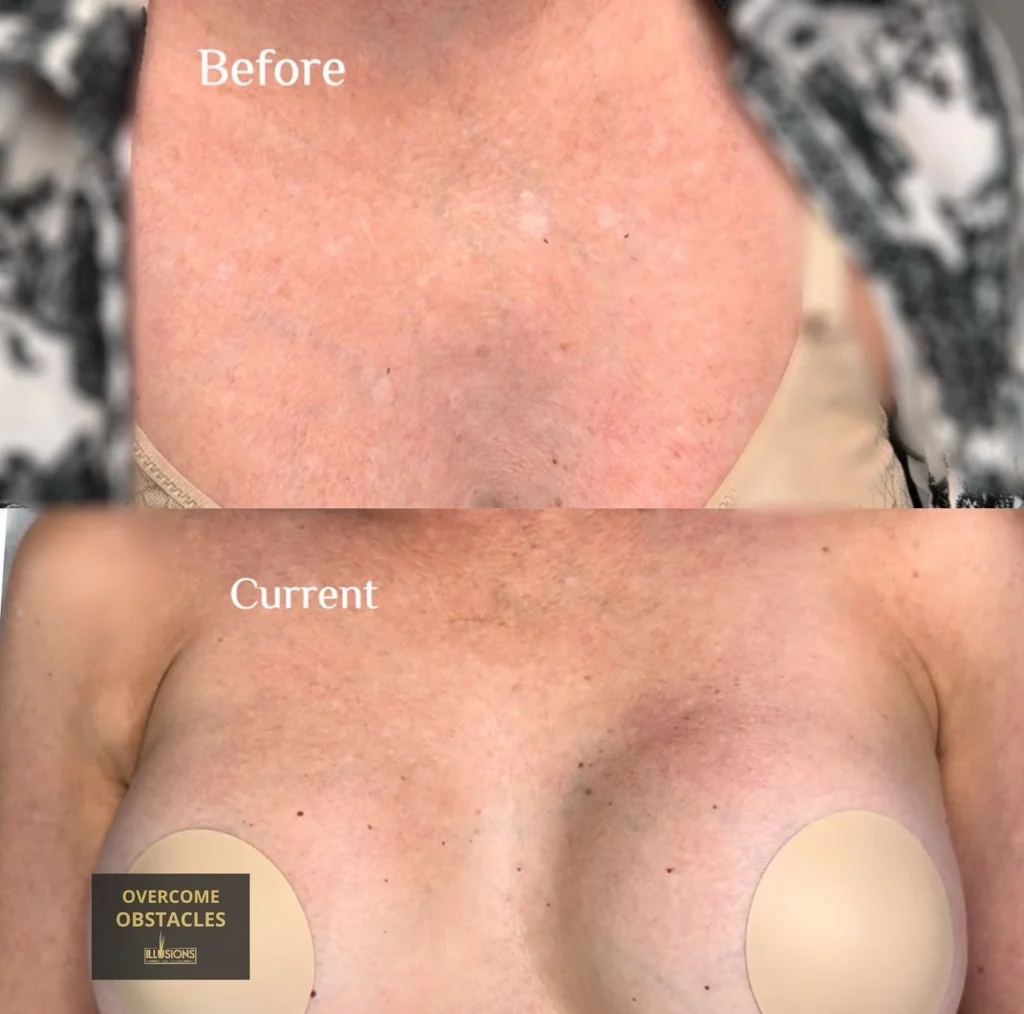
Upper chest — confirmed IGH, current/work-in-progress result after healing.
Camouflage Is Evaluated After Healing
IGH camouflage is not judged only by how pigment looks immediately after a session. The more meaningful evaluation happens after the skin has healed and the pigment has settled.
For cases that are still being refined, label the photography Current or Work in Progress rather than “After.” That keeps the gallery accurate and lets visitors understand that treatment plans can differ from client to client.
Frequently Asked Questions About IGH Camouflage
Does IGH go away on its own?
IGH lesions generally do not spontaneously repigment. They are benign, and treatment is usually pursued for cosmetic reasons.
Does paramedical tattooing cure IGH?
No. Cosmetic camouflage adds pigment to reduce visible contrast. It does not cure IGH or restore the skin’s natural pigment-production process.
Can IGH be camouflaged after creams or lasers haven't produced the result I wanted?
Some clients come to Illusions by Ink after trying other approaches without satisfactory cosmetic improvement. Candidacy for camouflage is evaluated individually.
How many sessions are needed?
There is no universal number. The featured dermatologist-referred client achieved the pictured 90-day healed result after one session; other cases may require additional sessions.
Can you camouflage IGH on the legs, arms, chest or back?
Potentially, yes, when the person is an appropriate candidate. This page shows confirmed IGH cases across each of those areas.
Are all white spots on skin IGH?
No. White or lighter spots can have different causes. People without a diagnosis may need medical evaluation before cosmetic camouflage.
Find Out Whether IGH Camouflage May Be Appropriate for Your Skin
Elena reviews the areas of concern, surrounding skin tone, treatment history and your goals before recommending an individualized camouflage plan.
ILLUSIONS BY INK STUDIO
Coppell / Dallas-Fort Worth, Texas · Houston by appointment
Paramedical tattooing · scar camouflage · skin-tone camouflage
Medical information note
IGH is benign. Cosmetic tattooing does not diagnose or treat the underlying condition. Results vary. Consultation required.
Request Your Consultation
WHAT TO EXPECT FROM YOUR CONSULTATION
Personal Assessment – Elena Personally reviews your goals and determines whether camouflage is appropriate for you.
Honest Guidance – Receive straightforward, expert recommendations tailored to your individual needs.
Clear Recommendations – Understand the recommended approach, expected results, and what the process involves.
Personalized Quote – Receive a plan and quote based on the area, complexity, and work required.
CONSULTATION — $50
Response: Within 1 day
* Consultation fee applied to session when booked.

